Words Borrowed from Around the World: A Guide to Loanwords
Loanwords show how languages adapt when people trade, migrate, cook, study, and create together.

Ever stop to think about how many words you use every day didn't originate in English? It's a linguistic magic trick, a constant cross-cultural dialogue that has enriched the vocabulary of speakers for millennia. Essentially, English is a giant linguistic melting pot, and the material that makes it shine has been sourced from every corner of the globe.
This incredible process of linguistic adoption has given us an enormous toolkit of words—what linguists call loanwords. These aren't just random additions; they are evidence of trade, conquest, exploration, and sheer human curiosity.

Languages borrow words for many reasons. A community may need a name for a new object or practice, but prestige, fashion, conquest, migration, trade, and bilingual contact can also encourage borrowing.
It's often the most direct and quickest route to communication. If you need to talk about a concept unique to another culture—like an item of exotic cuisine or a specific martial art—it is easier to adopt the term than to build an entirely new descriptive phrase. Language, after all, is a tool for survival, and efficiency is paramount.
The history of English is saturated with these contact moments. Consider words with Arabic histories. Algebra traveled through scholarly Latin from Arabic al-jabr. Coffee followed a different commercial path through Turkish and Italian forms. Grouping both as “Arabic contributions” is convenient, but their routes, dates, and intermediaries are not identical.
These borrowings aren't always from large, powerful civilizations; sometimes, they come from seemingly small exchanges. Look at the contributions from Hindi and other Indian languages. The word jungle, for example, is a direct borrowing that gives us a specific sense of dense, tropical growth. Similarly, shampoo, a practice of cleansing and an associated product, speaks to the deep connections formed through trade in goods and rituals.
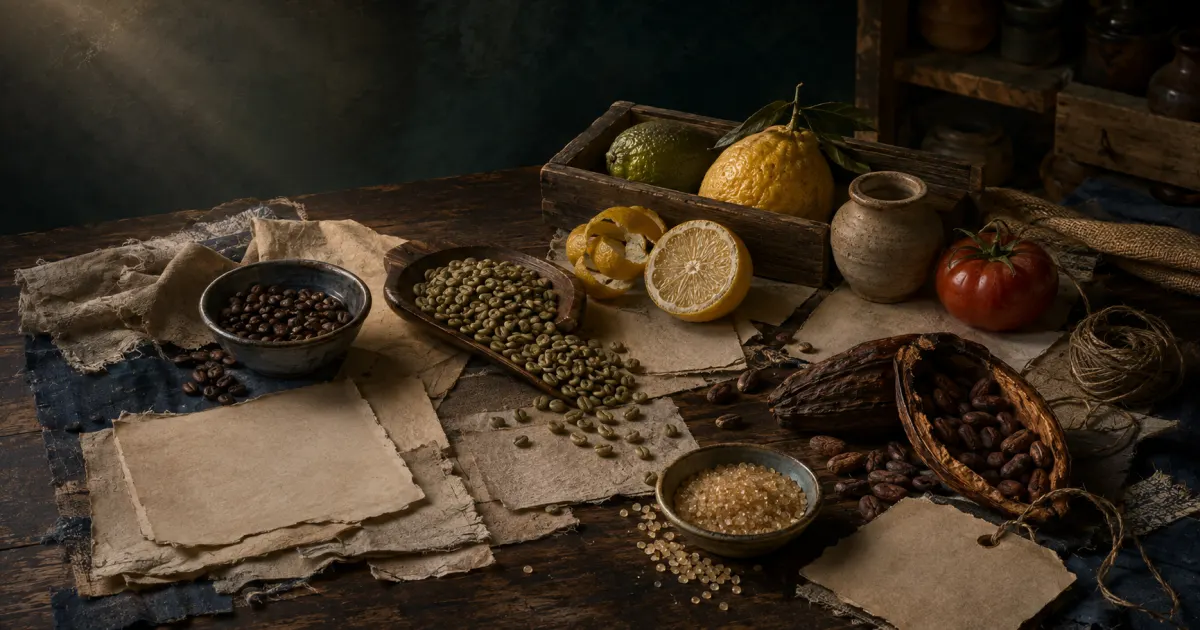
Our exposure to the Americas was perhaps the most dramatic source of borrowing. The concept of the cacao bean, central to ancient Mesoamerican life, gave us chocolate. Likewise, the tomato traveled across the Atlantic, fundamentally altering global cuisine. These words carry the DNA of entire ecosystems and dietary habits.
Japanese has also gifted us some fascinating terms. The word tsunami perfectly describes a massive, destructive wave, providing a precise warning in a single word. Karate, representing a specific style of martial discipline, is another excellent example of cultural knowledge being compressed into linguistic form.
The patterns of adoption are constantly at play. We see this with Nahuatl, the language associated with the Aztecs, which provided us with words that have changed the global dinner table. These words demonstrate that language acquisition is rarely purely intellectual; it is deeply practical.
Ultimately, loanwords are evidence of historical contact, economic dependence, prestige, migration, and cultural exchange. They are also adapted. Pronunciation, spelling, grammar, and meaning can all change as a borrowed form becomes ordinary in its new language.
Every time you use a word that isn't English in origin, you are connecting yourself to a vast, sprawling web of human history. You are participating in a conversation that started thousands of years ago and continues to deepen our understanding of each other. These loanwords are proof that language, in its most beautiful form, is inherently global.
Sources
- Oxford English Dictionary, histories and dated evidence for English loanwords
- World Loanword Database, comparative data on lexical borrowing
- WordOrigin, transmission paths for the example words